The copper your process demands: oxygen-free and made to spec.

Busbar and rod in high-purity copper or CuSn and CuAg alloy, along with custom copper profiles. Made at our plant in Houston, Texas, for manufacturers and distributors.

Minimum copper
99.99%
Maximum oxygen
5 ppm
Minimum conductivity, for UNS C10100
101% IACS
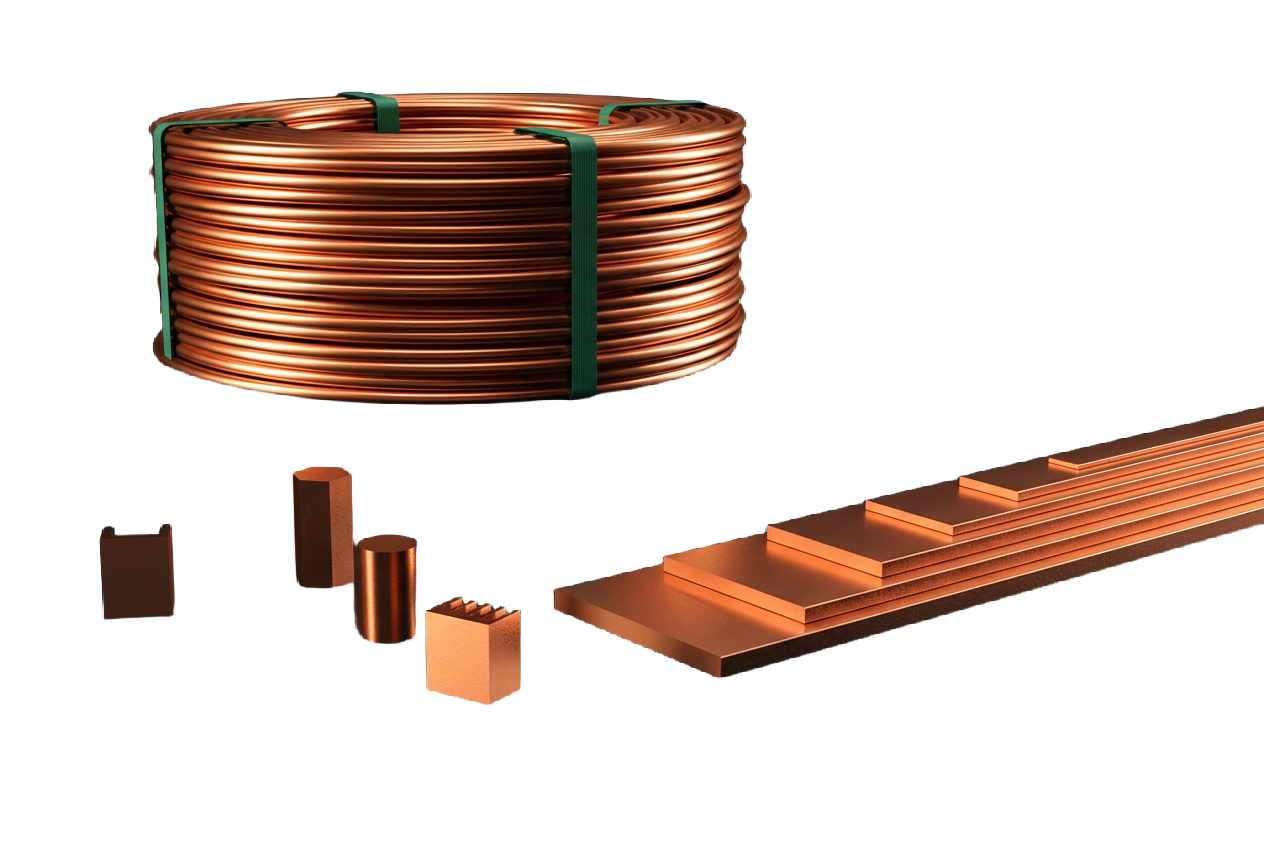
A strapped coil of oxygen-free copper rod, custom profiles and stacked busbar

Four product lines in high-purity copper

Made at our Houston plant to meet your requirements. Final specifications are confirmed with each order.

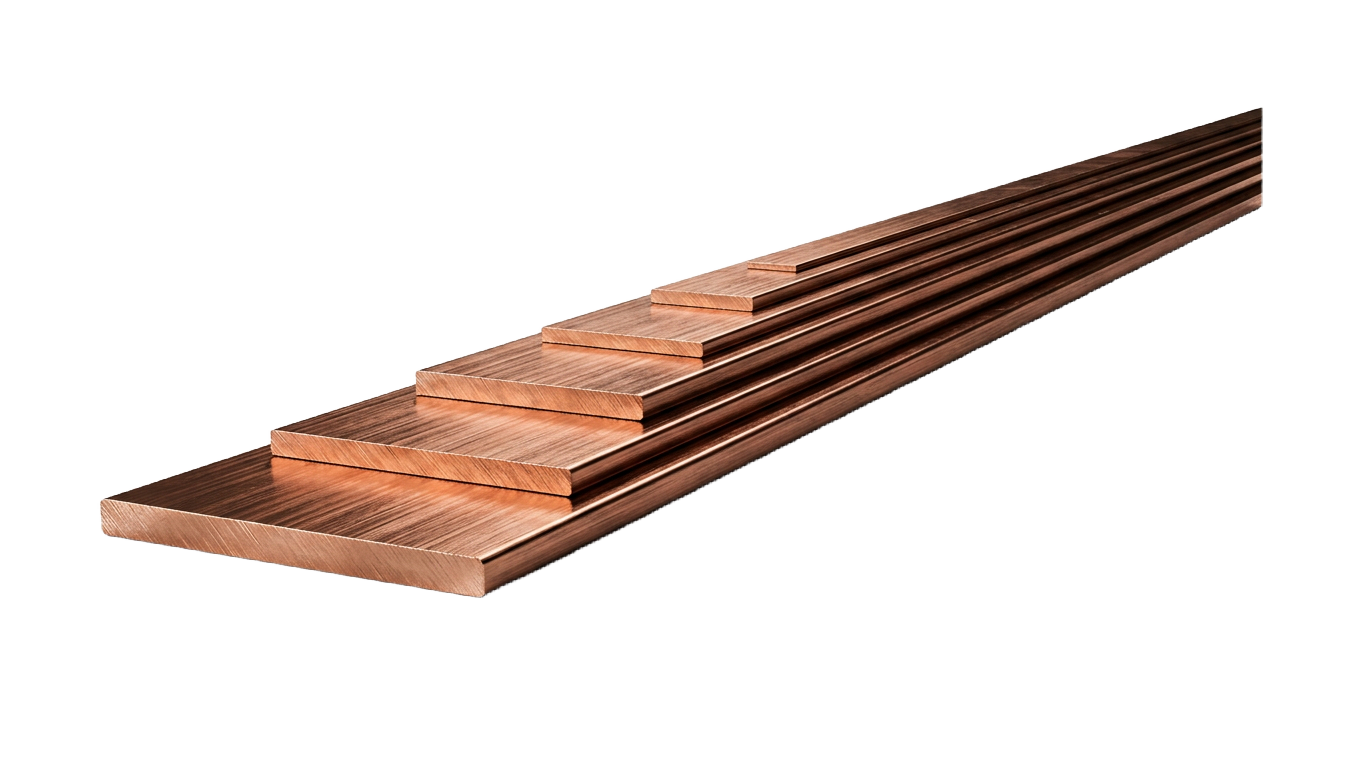
Stacked C10100 OFE busbar in several widths

Cu OFE Busbar

Oxygen-free copper bar for switchgear, transformers and power distribution.

View busbar
Standard
ASTM B187, H02 (Half-hard) temper
Copper
99.99% min., 5 ppm oxygen max.
Supply
Standard and custom sizes, available in lengths from 10 to 19 ft.
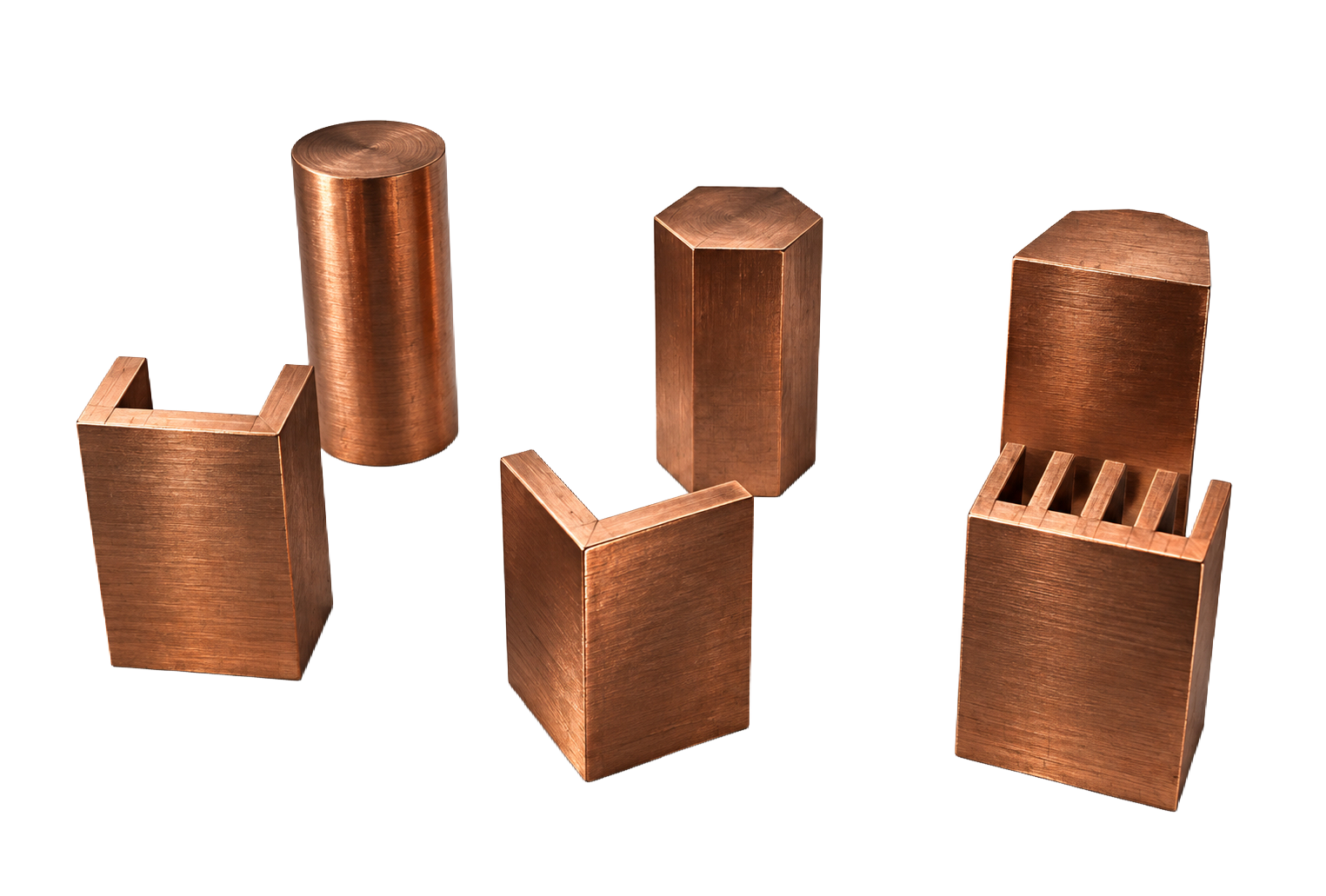
Custom copper profiles: round, hexagonal, channel, angle and finned sections

Custom profiles

Custom copper profiles made to your specifications using our Konform® continuous rotary extrusion process.

View custom profiles
Round bar
Ø 8 to 90 mm
Shapes
Round, square and hex bars, channels, angles and custom shapes.
Minimum order
MOQ as low as 2,205 lb.
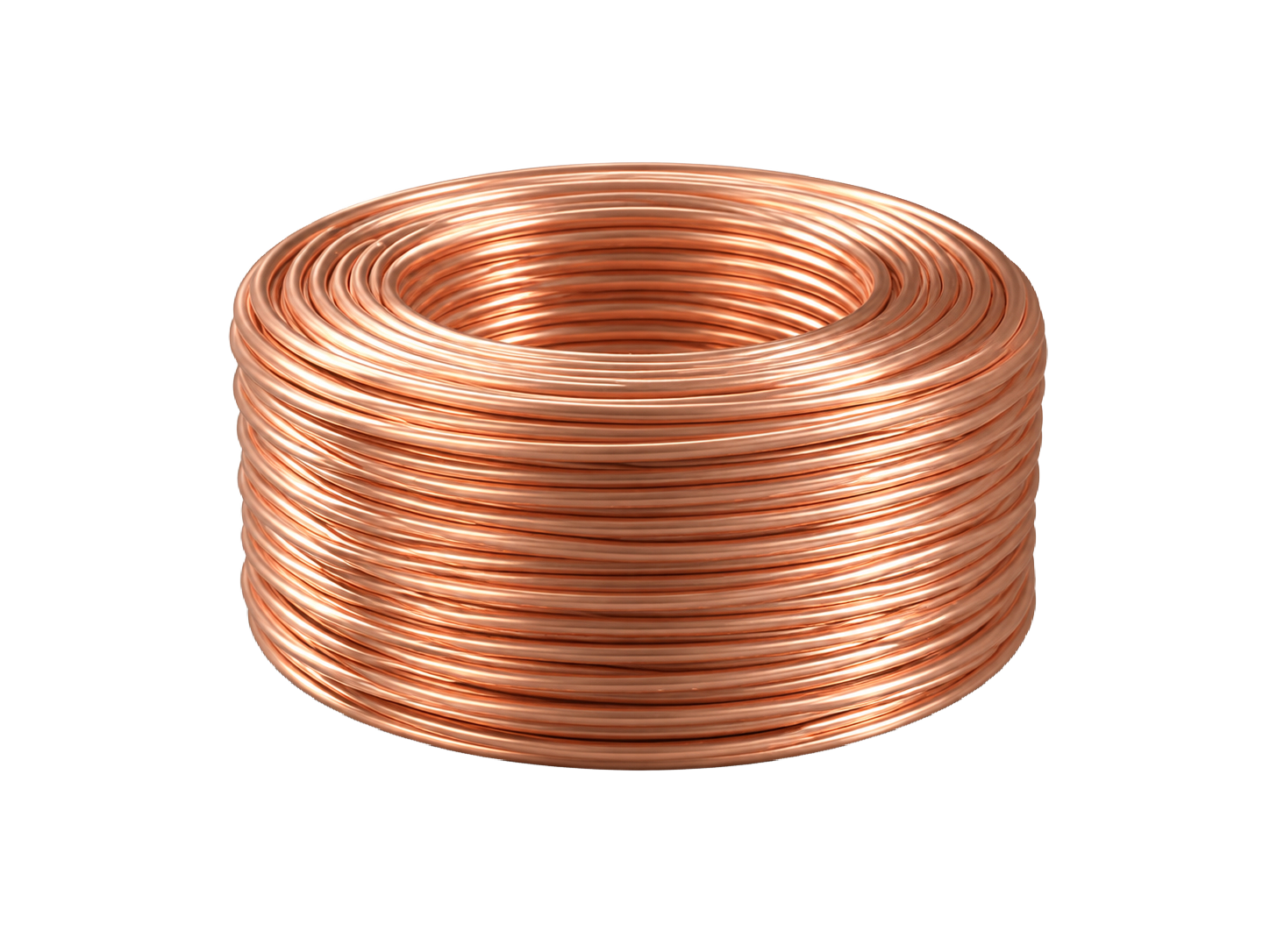
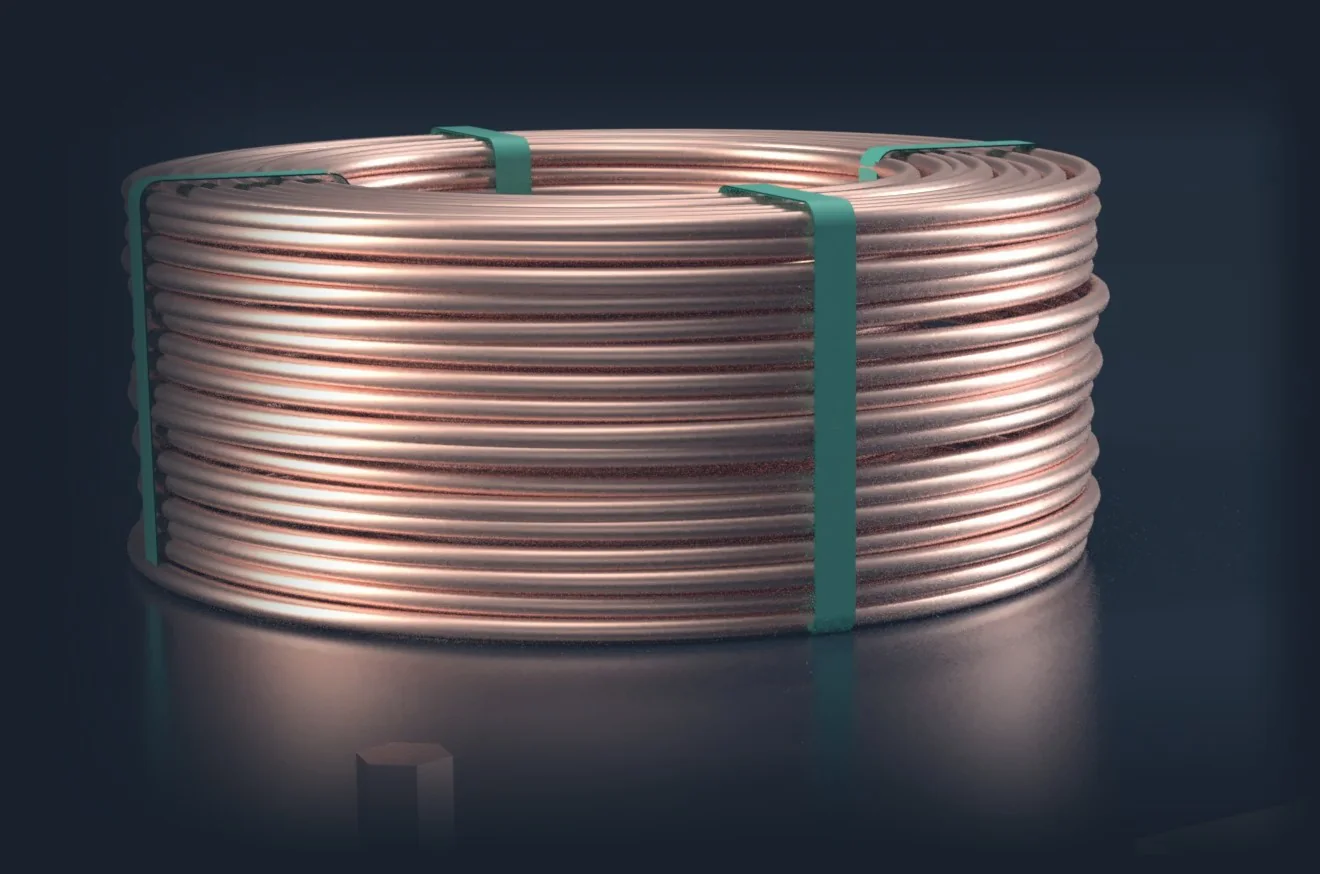
Strapped coil of C10100 oxygen-free copper rod

Cu OFE ROD

Oxygen-free copper rod for ultrafine wire drawing, made from ASTM B115 Grade 1 copper cathode.

View copper rod
Standard
ASTM B49, UNS C10100
Diameters
8 to 20 mm
Package
Coil weights from 6,000 to 9,920 lb.
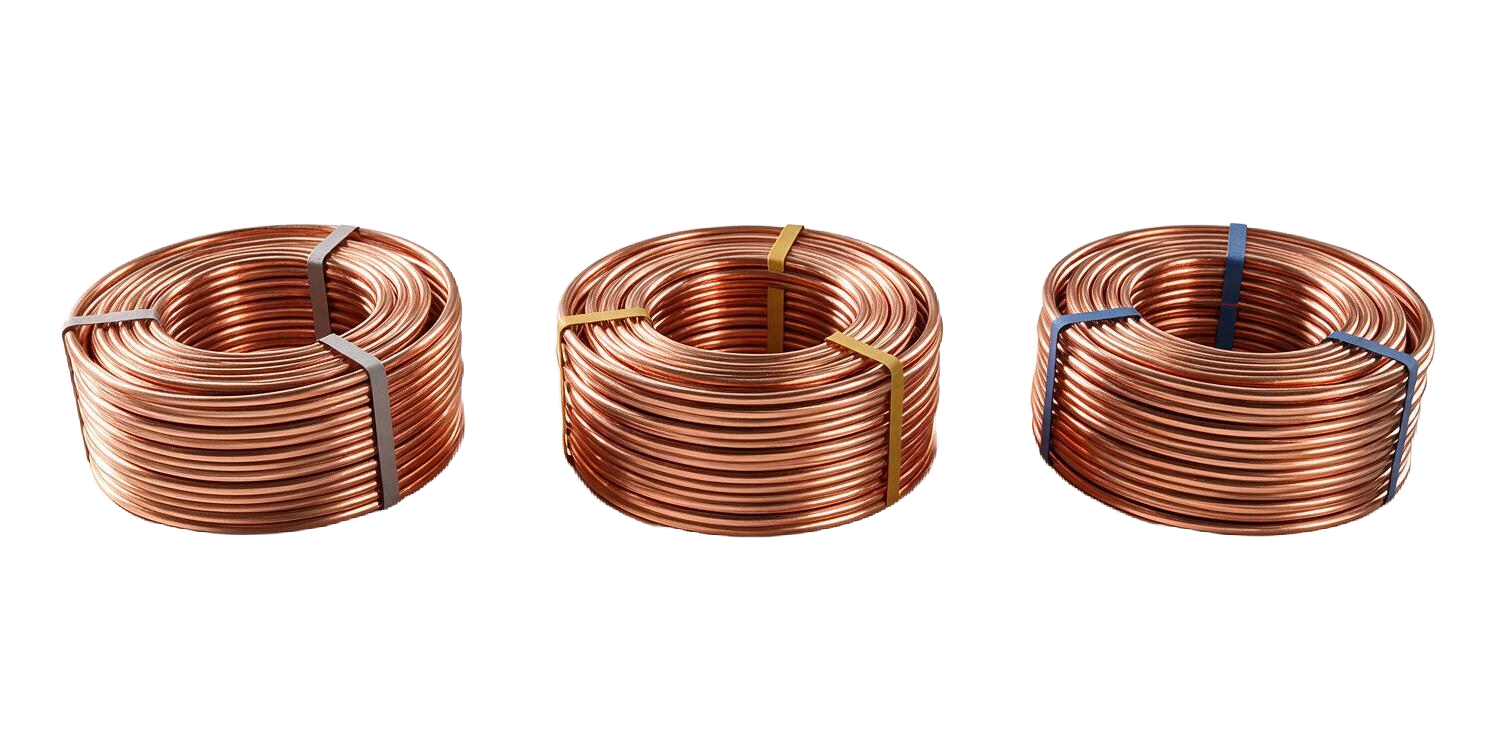
Three coils of alloy rod with silver, gold and blue straps: CuAg0.10, CuSn0.30 and CuMg0.5

Made-to-order alloys

CuAg and CuSn alloy rod in custom diameters to meet your requirements, for applications requiring greater mechanical strength or heat resistance than pure copper.

View alloys
Alloys
CuAg and CuSn
Grades
Alloying element content (%) tailored to your requirements.
Production
MOQ as low as 9,920 lb.

Stocking copper for resale?

Distributors and service centers can stock C10100 OFE busbar, rod and profiles direct from our Houston plant, with a quality certificate for every lot.

See the distributor program

Why oxygen-free copper

ETP copper, the most widely used copper grade, typically contains 200–400 ppm of oxygen, present as cuprous oxide (Cu₂O). Our C10100 OFE copper contains no more than 5 ppm. This difference affects how the copper performs during welding, bending and wire drawing.

What happens inside the metal

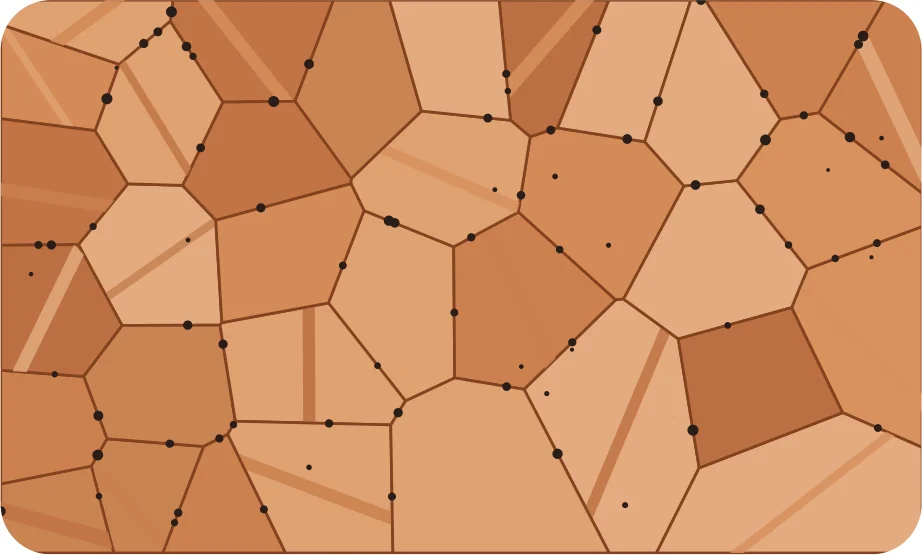
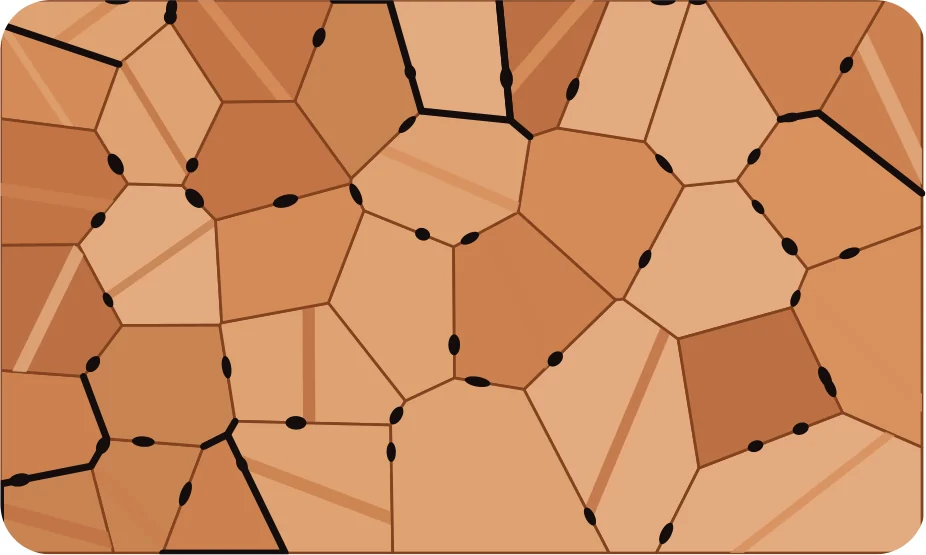
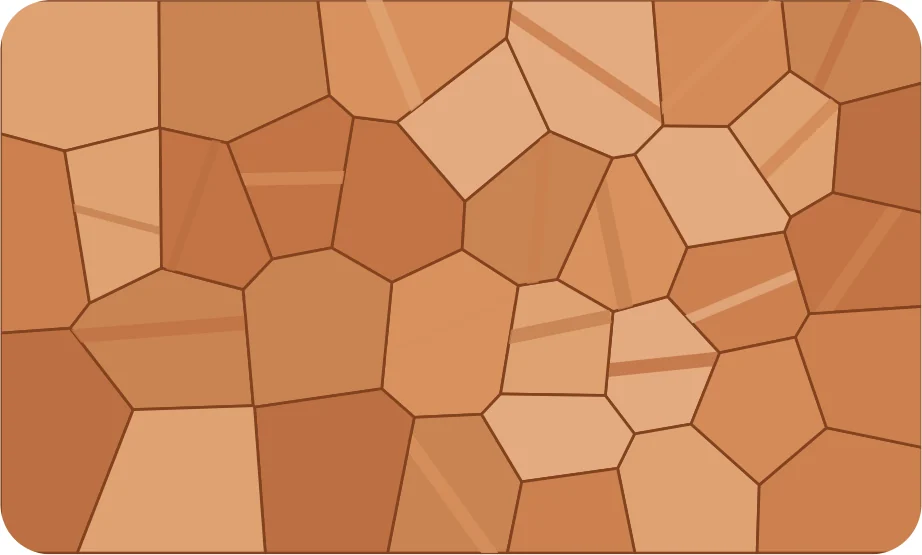
Illustrative microstructure schematic.

Schematic of ETP copper grains with dark cuprous oxide particles along the grain boundaries
ETP copper Cuprous oxide (Cu₂O) particles at the grain boundaries.
Schematic of ETP copper after hydrogen brazing, with voids and cracks along the grain boundaries
ETP after H₂ brazingembrittled Hydrogen reacts with the oxide (Cu₂O + H₂ → 2Cu + H₂O). Trapped steam opens voids and cracks.
Schematic of OFE copper after hydrogen brazing, with clean, intact grain boundaries
OFE after H₂ brazingintact No oxide, no reaction: the joint stays sound and the metal keeps its ductility.

OFE vs. ETP copper

Reference values for each grade.

Property C10100 OFE copperRearden C11000 ETP copperMost common grade
Minimum copper 99.99% 99.90%
Oxygen 5 ppm max. 200–400 ppm (typical)
Electrical conductivity (annealed) 101% IACS min. 100% IACS min.
Thermal conductivity 391 W/m·K 388 W/m·K
H₂ or reducing-atmosphere brazing Yes, no embrittlement No: embrittles above ~700 °F (370 °C)
Laser or electron-beam welding Sound joints, no oxide porosity Porosity risk
Fine wire drawing Fewer breaks: no oxide particles Oxide particles can cause breaks
High vacuum Suitable: low outgassing Not recommended

Brazing and welding without embrittlement

Suited to hydrogen, laser and electron-beam processes.

Top conductivity

101% IACS minimum, annealed.

More ductility

No oxide particles to start cracks during bending or drawing.

99.99% purity

With tight impurity limits, lot after lot.

Compare C10100 and C11000 in detail

Inside our Houston plant

Where your copper is cast, extruded, tested and packaged for shipment.

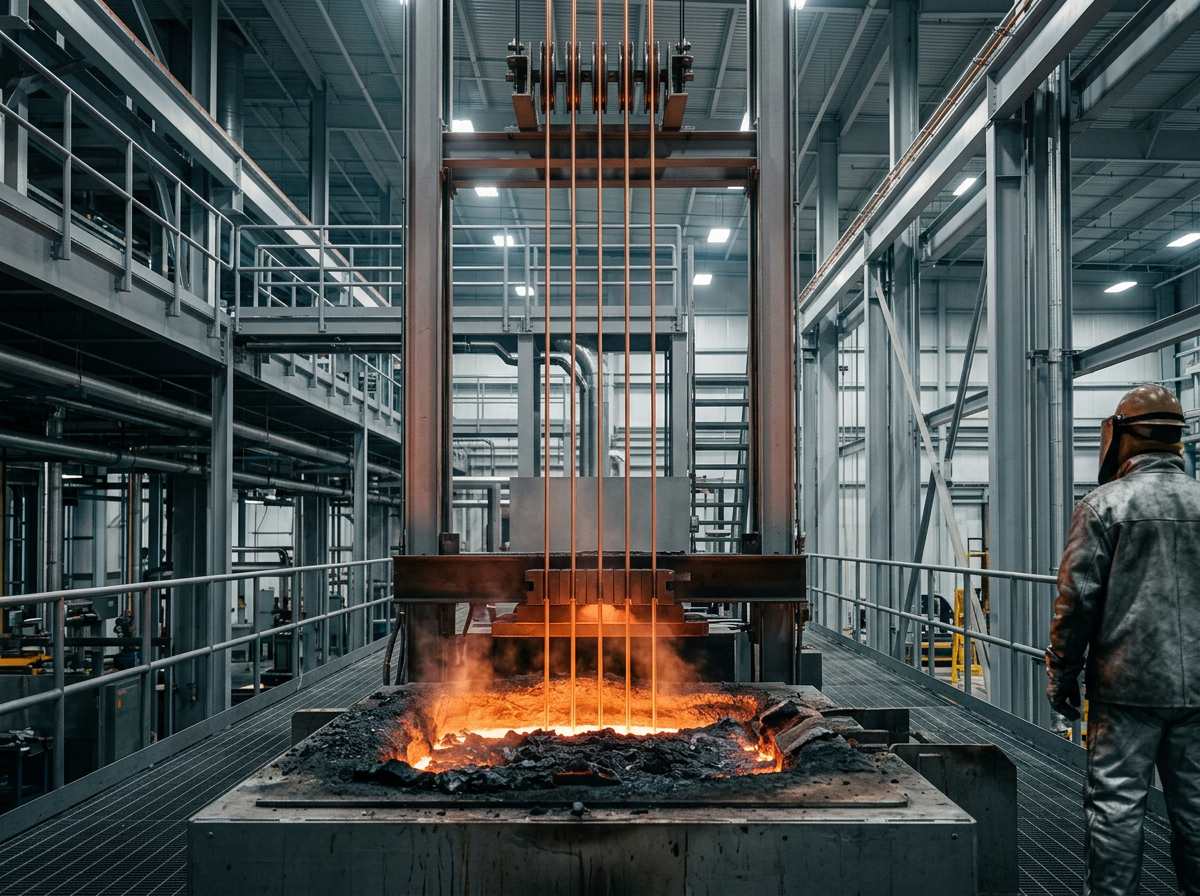
Vertical up-casting line drawing oxygen-free copper rod from the melt
Up-casting Line
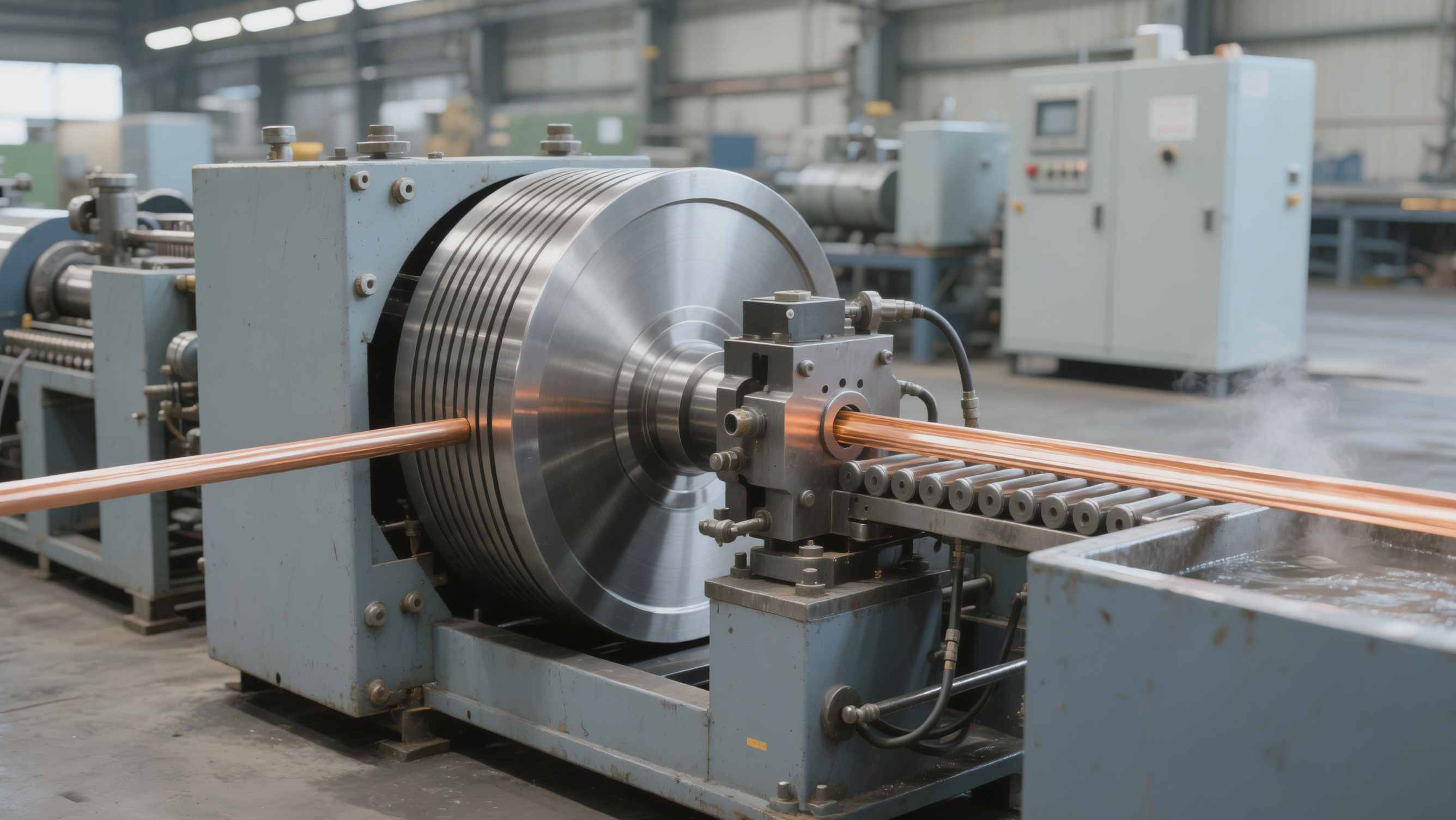
Continuous rotary extrusion line producing copper profiles
Continuous rotary extrusion line
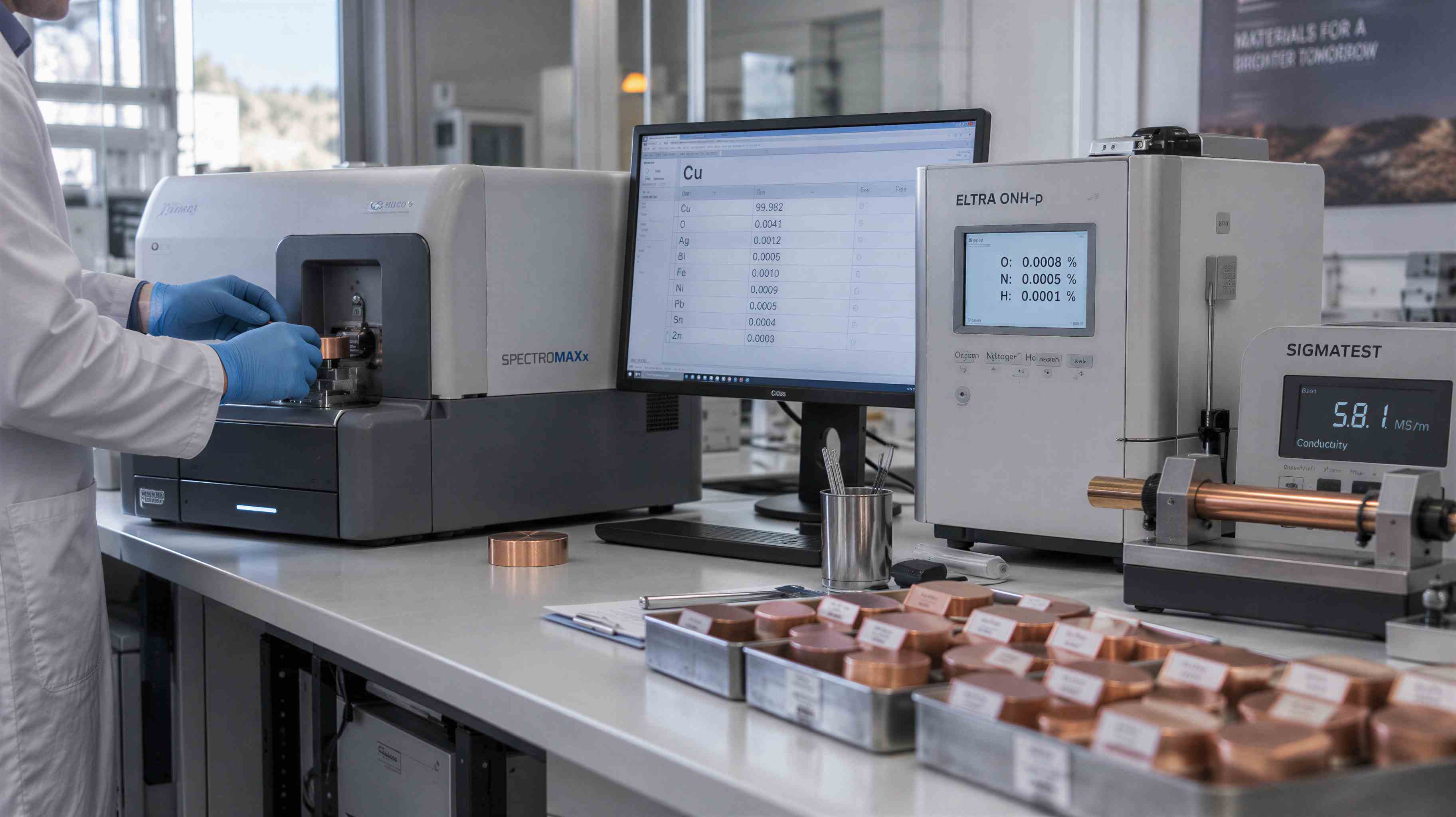
Quality laboratory with spectrometer and copper test samples
Laboratory
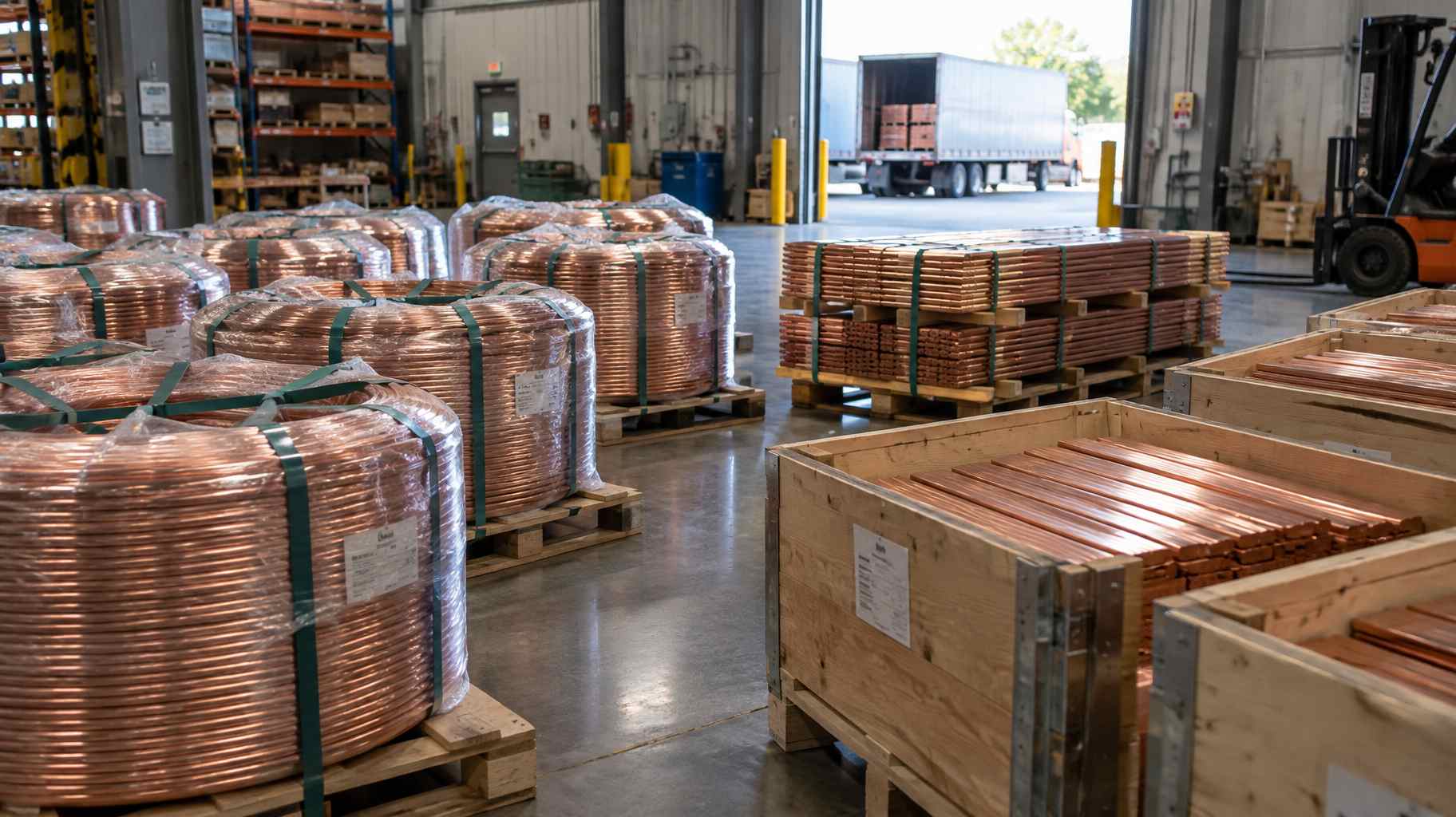
Copper rod coils and busbar packed and ready for shipment
Finished products ready for shipment
ISO 9001 certifiedQuality management system

A quality certificate for the whole process

Our in-house laboratory tests the copper from molten metal to finished product. Each shipment includes a quality certificate documenting the test results.

See what we measure and why
  1. 1

    Melting and casting

    Copper cathodes are melted and continuously cast into rod, with oxygen controlled throughout the process.

  2. 2

    Chemical analysis

    The rod is chemically and mechanically tested to verify compliance with ASTM B49.

  3. 3

    Continuous extrusion

    The rod is fed into our continuous rotary extrusion line to produce bars or custom profiles.

  4. 4

    Cutting and final inspection

    Products are cut to your specified length. Each lot is checked for electrical conductivity and examined metallographically before shipment.

Five details to choose the right material

  • Your application and process: welding, brazing, drawing…
  • Product and alloy
  • Sizes, tolerances and finishes
  • The standard or certification you require
  • Volume and delivery destination

Rearden Precision, Houston, Texas plant. Plant pickup or delivery anywhere in the U.S.

Coil of oxygen-free copper rod, strapped for shipping